
Is There Any Cure of Interstitial Cystitis In Ayurveda
Interstitial cystitis is also termed as painful bladder syndrome. It is a chronic condition which causes pressure on the bladder resulting in pain, sometimes associated with pelvic pain. The pain may be mild to severe.
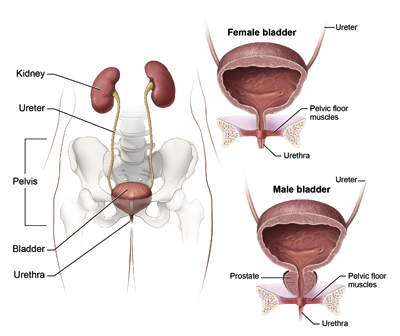
Bladder or urinary bladder is a muscular, hollow organ in which urine is stored. Urine keeps on collecting in this bladder until it is full and then the signal is transmitted to the brain through pelvic nerves that it’s time to urinate. This process results in the urge to urinate. Now in the case of interstitial cystitis these nerve signals get mixed up and there are frequent urges to urinate every then and now. The volume of urine is less as there is only a small amount of urine collected and then there is an urge to urinate due to a problem in the signal processing. Women are more prone to interstitial cystitis as compared to men and it makes the life of patient difficult.
What Is the Ayurvedic Point of View on Interstitial Cystitis?
According to Ayurveda, interstitial cystitis is caused due to the aggravation of the Vata and Pitta dosha (two of the three doshas). Vata governs all the movements in the body and mind. Vata is cold, subtle, mobile, dry and light in nature. Apana Vata is a sub-dosha of Vata which is mainly responsible for interstitial cystitis. This subtype of Vata dosha, i.e. Apana Vata is located in the lower pelvic region and controls the elimination of the urine, stool, menstrual blood, and reproductive fluids. Pitta dosha is also involved in its causation which symbolizes fire or heat. Aggravated Vata dosha manifests as pain and aggravated Pitta dosha as a burning sensation. Imbalance or aggravation of these doshas results in accumulation of the toxins in the body which leads to pain, burning sensation, and frequent urination. In Ayurveda, interstitial cystitis is known as ‘Ushna Vata’.
What are the Symptoms of Interstitial Cystitis?
- Lower pelvic pain in women between anus and vagina
- In men pain is between scrotum and anus
- Chronic pelvic pain
- Persistent frequent urge to urinate
- Painful sexual intercourse
- Discomfort and pain when the bladder fill which is relieved after urination
- Frequent urination of small volume which follows throughout day and night.
- Symptoms severity vary from person to person and there can also be a symptom free period. Urinary tract infection can worsen the symptoms of interstitial cystitis.
What are the Causes of Interstitial Cystitis?
The exact cause is not known but there are certain factors which play an important role in its causation, like:
- The most common one is a defect in the epithelium lining of the bladder which results in leakage of the toxic substances resulting in irritation of the urinary bladder wall.
- Autoimmune factors
- Heredity
- Infection
- Allergy
What Complications Can Pose in Interstitial Cystitis?
- Reduced bladder capacity
- Lower quality of life due to frequent urge to urinate and pain
- Sexual intimacy problem due to painful intercourse
- Emotional troubles because of chronic pain and interrupted sleep
How can Interstitial Cystitis be diagnosed?
- Medical history
- Pelvic exam
- Urine test
- Cystoscopy
- Biopsy
- Urine cytology
- Potassium sensitivity test
How is Interstitial Cystitis Treated?
Conventional treatment of cystitis includes nonsteroidal anti-inflammatory drugs, antihistamines, and nerve stimulation in some cases. Surgery has opted in very rare cases.
Herbal Remedies by Planet Ayurveda for Interstitial Cystitis
Planet Ayurveda comes up with the 5 specific herbal remedies prepared from herbs of best quality under strict Ayurvedic principles. These remedies are purely vegetarian and are not tested on animals. All of these remedies are free from chemicals, additives, preservatives, colors, and dye.
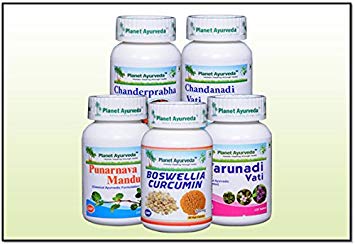

1. Chanderprabha Vati
These tablets are full of wonderful medicinal herbs which are used for various health ailments. It consists of herbs like Shilajit (Asphaltum), Guggul (Commiphora mukul), Karpoor (Cinnamomum camphora), Vacha (Acorus calamus), Mustak (Cyperus rotundus), Haridra (Curcuma longa) etc. It helps to relieve pelvic pain and burning during urination. Frequent urination is also relieved by these tablets.
Dosage- Take 2 tablets two times a day after 30 mins of the meals with plain water.
2. Chandanadi Vati
It is an herbal blend of herbs like Shweta chandana (Santalum album), (Piper cubeba), Amalaki (Embelica officinalis), (Shorea robusta) etc. These tablets help to relieve inflammation and ease the symptoms like pain and swelling. Chandanadi Vati is a specific remedy for the treatment of dysuria, burning during micturation and other urinary troubles. These tablets also help to treat nephrotic syndrome, nephritis and skin disorders.
Dosage- Take 2 tablets two times a day after 30 mins of the meals with plain water.
3. Punarnava Mandur
These herbal capsules are known to be a natural diuretic and also helps to treat various other diseases. It is a herbal formulation of herbs like Punarnava (Boerhavia diffusa), Shunthi (Zingiber officinale), Pippali (Piper longum), Maricha (Piper nigrum), Amalaki (Emblica officinalis) etc. Its anti-inflammatory properties help to relieve inflammation and associated symptoms. The analgesic action of Punarnava mandur helps to relieve pain.
Dosage- Take 2 tablets two times a day after 30 mins of the meals with plain water.
4. Varunadi Vati
Amazing medicinal herbs, i.e. Varun (Crateva nurvala), Punarnava (Boerhavia diffusa), Gokshur (Tribulus terrestris), and Shuddh Guggul (Commiphora mukul) are used to prepare these tablets. It is a natural antibiotic which prevents and treat infections. Varunadi Vati specifically helps to treat urinary tract infection and associated symptoms like pain, swelling and burning during urination.
Dosage- Take 2 tablets two times a day after 30 mins of the meals with plain water.
5. Boswellia Curcumin
These herbal capsules are an herbal blend of Shallaki (Boswellia serrata) and Curcumin (Curcuma longa). Boswellia curcumin capsules possess anti-inflammatory properties which help to relieve pain, frequent urination and burning in urination. It also has antibacterial, antifungal and antiviral properties which help to treat and prevent infections.
Dosage- Take 1 capsule two times a day after 30 mins of the meals with plain water.
Diet and Lifestyle Advice for Interstitial Cystitis Patient
Food to be avoided-
- Cheese and heavy cream
- Chocolates
- Ice creams
- Fat meats
- Deep fried foods
- Packaged drinks and alcohol
- Avoid sugary drinks and juices of citrus fruits.
Food that Can Be Taken-
- Fresh fruits and green vegetables (Spinach should not be taken/ Fenugreek can be taken)
- Nuts like almonds
- Green Sprouts
- Grilled fish
- Boiled Chicken
- Egg white
Home Remedies
- Boil few leaves of Tulsi (Basil) for 15 minutes in a cup of water. Mix some honey in it and take this mixture two times a day. This helps to relieve symptoms of interstitial symptoms.
- Mix one cup of fresh yogurt with one teaspoon of Isabgol (Psyllium husks) and take it one hour after dinner.
